
Strengthening the assessment systems Africa needs to know if children are learning.
AFLAI helps governments understand whether children are learning foundational literacy and numeracy — and build the internal capacity to use that data to improve outcomes.
What is AFLAI?
The Africa Foundational Learning Assessment Initiative is an Africa-led initiative that helps governments strengthen the assessment systems they need to understand whether children are learning foundational literacy and numeracy — and to use that data to improve outcomes.
AFLAI is not a new assessment. It is not promoting any one tool or methodology. It is a practical support mechanism that helps governments make better decisions about their assessment systems, access technical expertise when they need it, and build the internal capacity to sustain their systems independently.
Why AFLAI?
Assessment activity across Africa has grown faster than assessment capacity. More than half of countries collect foundational literacy and numeracy data, but fewer than one in five do so systematically at the primary level. The gap between collecting data and using it is wider still.
Psychometricians and statisticians are scarce inside Ministries of Education. Countries continue to rely on external providers for item development, data management, and analysis — without building the internal expertise to sustain those functions. When donor priorities shift, assessment capability built through projects disappears.
AFLAI exists to change that. Not by running assessments for governments, but by helping them run better assessments themselves.
Our Principles
Government ownership comes first.
Every engagement builds government capacity, not dependency.
Country priorities before predefined solutions.
We start by understanding what the government is trying to achieve.
Evidence over assertion.
Resources are selected because they work in African contexts, not because they are widely cited.
Accessible and usable.
We prioritize practical tools, templates, and guides over dense academic frameworks.
Africa-led and Africa-relevant.
We prioritize resources developed by or with African institutions, in African languages.
Transparent about limitations.
Every resource explains what it is good for and where it may need adaptation.
A curated platform, not a repository.
Everything on this site — whether created by AFLAI, PASEC, PAL, or any other partner — has been reviewed against a set of explicit quality standards. When a government or practitioner finds a resource here, they should be able to trust it is technically sound, practically usable, and relevant to African assessment contexts. They should not have to guess.
Our Quality Principles
1
Government ownership comes first
We do not endorse approaches that create dependency on external providers or position assessment as something done to governments rather than by them.
2
Context before content
Resources are selected because they are adaptable to different contexts, not because they offer a universal solution. We flag where adaptation is needed.
3
Field-tested over theoretical
We prioritize material applied in real assessment cycles, with real enumerators, in real Ministry contexts.
4
Accessible and usable
Dense academic papers are not resources. Usable tools, templates, checklists, and guides are.
5
Africa-led and Africa-relevant
We supplement with global resources only where they add genuine value and can be adapted.
6
Transparent about scope and limitations
Every resource is annotated with what it's good for, its context of origin, and who reviewed it.
How Resources Are Reviewed
Before any resource is published on the AFLAI site, it goes through a two-stage review, conducted by a named technical expert in the relevant pathway area.
STAGE 1
Relevance & usability check
Does this resource help a government at this stage of their assessment journey? Is it practical for Ministry staff or practitioners to use without significant additional support? Is it available in an accessible format and language?
STAGE 2
Technical quality review
Is the content technically sound and field-tested? Does it meet professional standards for assessment design, data collection, psychometric analysis, or data use? Is it methodologically appropriate for its context?
Resources that pass both stages are published with a clear annotation: what the resource is, what it is good for, what context it was developed in, who reviewed it, and any known limitations or adaptation needs. The reviewer’s name and the basis for their endorsement are published alongside every resource.
What this means for partners
AFLAI welcomes resource contributions from assessment practitioners, institutions, and organizations across the continent. If you have material you believe meets these standards, submit it through the contact form. We will review it and notify you of the outcome.
AFLAI does not pay for content submissions. We credit and acknowledge all contributors whose resources are published. If you are a technical expert interested in contributing as a pathway reviewer, please get in touch.
Six pathways. Find your entry point.
AFLAI’s support is organized around six technical pathways. Each corresponds to a stage in a government’s assessment journey — the question they are trying to answer.
“Why do we need a foundational learning assessment system, and where do we start?”
Who this is for
Governments that know learning outcomes are a priority but haven’t yet defined what kind of assessment system they need, who should own it, or how it connects to existing curriculum and policy.
What AFLAI offers
- A short diagnostic to help you clarify your assessment problem
- An overview of what different types of FLN assessment systems look like
- Examples from other African countries at a similar starting point
- A framework for mapping current assessment activities and identifying gaps
When this becomes a TA engagement
When you need facilitated support to build alignment across Ministry departments, development partners, and stakeholders on what kind of assessment system to pursue and why.
“What assessment architecture should be in place to support foundational learning, and how do we know where we stand?”
Who this is for
Governments with some assessment activity underway but uncertainty about whether their current system is fit for purpose — the right grades, subjects, skills, and usable data.
What AFLAI offers
- A maturity self-assessment tool — from building to institutionalising capacity
- Architecture options: national, regional, citizen-led, sample-based, census-based, hybrid — with trade-offs
- A framework for mapping existing assessments against foundational learning objectives
- Examples of countries that have redesigned their assessment architecture
When this becomes a TA engagement
When you need expert support to interpret self-assessment results, design a new assessment architecture, or build stakeholder consensus.
“How do we develop new assessment instruments or adapt existing ones to fit our context?”
Who this is for
Governments that have decided on an assessment approach and now need support developing or adapting the actual tools — item development, language adaptation, piloting, and psychometric review.
What AFLAI offers
- An annotated item bank organized by skill, subtask, and language
- Guidance on item development from subtask mapping through field testing
- Language adaptation checklists for mother tongue instruction contexts
- Passage quality rubrics and worked examples
When this becomes a TA engagement
When you need hands-on support with item development, language adaptation for a new curriculum, piloting, or psychometric review of existing instruments.
“How do we collect data credibly and at scale?”
Who this is for
Governments with assessment tools in place but struggling with implementation — training enumerators, field logistics, data quality, and digital tools.
What AFLAI offers
- A complete enumerator training package with QA checklists and a training-of-trainers model
- Administration manuals and field logistics guides
- A software decision tool for choosing the right data collection platform
- Consent and safeguarding protocols
- A WhatsApp-based chatbot for enumerator support in the field
When this becomes a TA engagement
When you need operational support for sampling design, enumerator training, digital tool setup, or field management.
“We have data. How do we interpret it, and how do we make sure it changes what happens in classrooms?”
Who this is for
Governments collecting assessment data but struggling to turn it into decisions — curriculum adjustment, teacher support, resource allocation, or reporting.
What AFLAI offers
- Analysis plan templates and guides for interpreting FLN data
- Benchmarking explainers — what a benchmark is, how it's set, and how to communicate it
- Dashboard design examples and data visualization templates
- Policy brief templates for sharing results with decision-makers
- Feedback loop models — from national assessment to school and classroom level
When this becomes a TA engagement
When you need support with psychometric analysis, benchmark-setting workshops, building a data use culture, or designing feedback systems that reach schools.
“How do we maximize our assessment system for global alignment and reporting, including SDG 4.1.1?”
Who this is for
Governments with a functioning assessment system that want their data to speak to global frameworks and be comparable across countries and over time.
What AFLAI offers
- An assessment framework crosswalk mapping FLEX, African Union frameworks, CESA, and SDG 4.1.1
- Guidance on linking national benchmarks to global minimum proficiency standards
- Benchmarking workshop materials developed with UIS
- Country examples of national benchmark-setting processes
When this becomes a TA engagement
When you need support setting national benchmarks, linking to SDG 4.1.1, preparing for global reporting, or engaging with networks like PASEC or PAL.
Three ways to work with AFLAI.
Most governments start with one and move into others as their needs become clearer.
Technical Assistance
Targeted, time-limited support on a specific assessment challenge. You identify the problem; AFLAI helps scope the need and matches you with the right technical expert or institution. Every engagement builds your government’s capacity, not dependency.
Complete the government interest form and a member of the AFLAI team will follow up within two weeks to begin a scoping conversation.
Knowledge Exchange
A practitioner community connecting governments, national assessment bodies, technical experts, and regional institutions across the continent — webinars, peer learning, and shared implementation lessons. Topics are set against live country demand.
Already underway through ADEA.
Cohort Engagement
Governments facing similar technical challenges — for example, countries transitioning to local language assessment, or building enumerator capacity from scratch — can be brought together into a structured cohort combining peer learning, shared resources, and expert facilitation.
Reviewed by named experts, not anonymous panels.
AFLAI’s technical advisors curate and review the resources on this site. Each resource is signed off by a named expert in the relevant pathway area — so when you use a resource, you know who reviewed it and why it meets AFLAI’s quality standards.

Hetal Thukral, PhD
Hetal Thukral, PhD, is an education measurement, evidence, and learning specialist with over two decades of experience supporting education systems across more than 35 countries. She is Principal at sustainED, LLC and previously served as Division Lead for Evidence & Learning at USAID’s Center for Education, where she helped shape approaches to education research, learning measurement, evidence use, and data-driven decision-making. Earlier in her career, she led evaluation and research at School-to-School International and worked across large-scale education programs, with particular expertise in foundational learning, early grade reading assessment, monitoring and evaluation, and the translation of assessment data into improvements in policy and practice. Her work spans the design and quality assurance of learning assessments, education data systems, evaluation methodologies, and strengthening government and partner capacity to generate and use credible evidence. She holds a PhD in Education Policy, Measurement and Statistics from the University of Maryland and an MA in International Education from George Washington University.
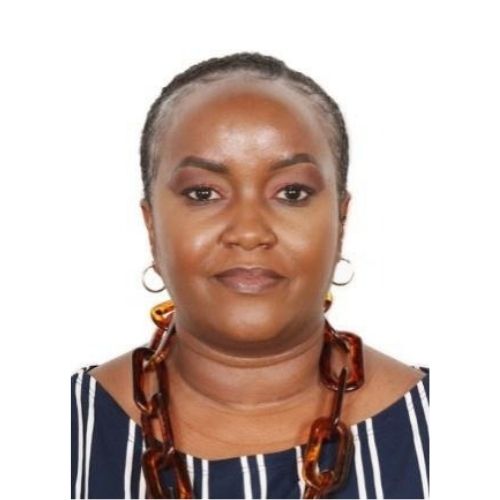
Caroline Riungu, PhD
Caroline Riungu is a senior Monitoring, Evaluation and Learning specialist with over 15 years of experience across education, health, social protection and youth development in Africa and the Caribbean. She has held technical and advisory roles with UNICEF, Education Development Center, FHI 360 and USAID funded programmes. Her expertise includes MEL system design, mixed methods research and evaluation, gender responsive measurement, government engagement, capacity strengthening and translating evidence into practical policy and programme decisions. Her approach emphasises involving governments and local partners from the outset to strengthen ownership, institutional capacity and the sustainability of systems beyond individual programmes.

Clement Chao
Clement Chao is a Monitoring, Evaluation and Learning (MEL) specialist with 14 years of experience in the development and the humanitarian space, and with deep expertise in the education sector. Through RTI’s TUSOME (National Early Grade Literacy Program), he supported the roll-out, the implementation, and the MEL component, including building clients capabilities in MEL, learning outcome assessments, teacher training and support, enrolment tracking, book distribution, and engagement with Ministry of Education, Teachers Service Commission, together with the other education stakeholders at regional and national levels. More recently, he supported the baseline assessment for EDU-FUNGUA ICT Education Intervention, led by the Ministry of Education (MoE), and implemented in collaboration with the EIDU. The technology-enabled literacy and numeracy intervention incorporates AI-enabled learner assessments and longitudinal tracking of learner’s progress, providing opportunities to generate timely evidence to inform the implementation and improve learning outcomes. His expertise spans MEL system design, routine and third party monitoring, data management, evaluations, assessments, and collaboration, learning and adaptation.

Dunston Kwayumba
Dunston Kwayumba, PhD, is a Monitoring, Evaluation and Learning (MEL) and education systems specialist with over 15 years of experience across Africa and Southeast Asia. His expertise spans foundational learning, EGRA/EGMA, learning assessments, EMIS, national assessment systems, data quality, and the use of evidence for decision-making. He has worked extensively with Ministries of Education in Kenya, Tanzania, Uganda, Nigeria, Somalia, and Southeast Asia, supporting learning measurement, education data systems, and the contextualization of assessment tools and benchmarks to local languages and education systems. His work emphasizes government ownership and the integration of donor-funded M&E approaches into national systems, helping build sustainable evidence and learning structures. His experience also extends to ICT in education, digital personalized learning, and AI-enabled approaches to assessment and teacher support.
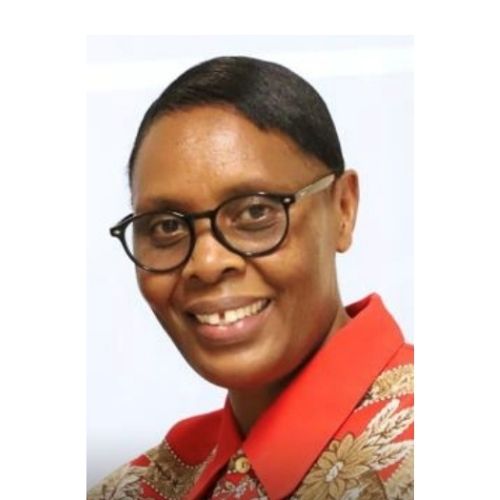
Vestine Nyirahabimana
Vestine Nyirahabimana is a Monitoring, Evaluation and Learning (MEL) professional with more than 10 years of experience, including specialist experience supporting education programmes in Rwanda. Her education expertise includes early-grade learning outcomes, teacher capacity development, parental and community engagement, theories of change, M&E frameworks, baseline evaluation and the use of evidence to strengthen programme design and implementation. Vestine has worked directly with the Rwanda Education Board and Ministry of Education, developing monitoring tools, tracking programme implementation, and assessing learning outcomes. She has also provided MEL leadership across large donor-funded programmes, helping teams strengthen programme quality, learning and accountability. She brings a strong focus on government ownership and sustainability, including involving government counterparts in programme design, strengthening their capacity to use evidence and aligning interventions with national education priorities. Her approach to scale also considers longer-term factors such as post-adoption monitoring, government financing and integrating successful education interventions into government planning and budgets.

Franklin Onyia
Franklin Onyia is a senior Monitoring, Evaluation and Learning (MEL) expert with more than 15 years of experience designing and strengthening education evidence systems across Africa and India. He brings deep expertise in MEL frameworks, baseline studies, randomized controlled trials (RCTs), learning assessments, data analysis, and the integration of monitoring systems into government structures. His experience includes managing evidence functions across large-scale programs with FHI 360, EDC, RTI International, the World Bank and other donor-funded initiatives, spanning foundational learning, teacher professional development and education systems strengthening. Franklin has worked extensively with Ministries of Education and education agencies, particularly in Nigeria, as well as in Kenya and Sierra Leone, building strong government relationships and supporting the use of evidence within education systems. He holds a Master’s degree in Information Technology. His approach emphasizes leveraging technology to produce credible, practical evidence that informs program adaptation, scale-up and policy decisions rather than serving primarily as a donor-reporting requirement.

Innocent Chukwu
Innocent Chukwu is a senior Monitoring, Evaluation, Research and Learning (MERL), education data systems and technology specialist with approximately 15 years of development experience, largely focused on education. His expertise spans foundational learning, teacher professional development, early-grade learning assessments, implementation fidelity, programme evaluation, data systems and evidence-informed decision-making. Beginning his career in computer programming and data analysis, Innocent later worked with RTI on the development of M&E systems and digitisation of early-grade learning assessment tools, including work associated with the Tangerine assessment platform. He has supported education evaluations across Nigeria, Kenya, Ghana and the Philippines and currently holds a senior M&E leadership role on Nigeria’s PLANE programme, with experience leading multidisciplinary M&E, technology and data system teams. He has strong relationships with government and education stakeholders in Nigeria and is a strong advocate for government co-creation and government-led implementation rather than parallel delivery systems. Combining strategic leadership with hands-on expertise in data analysis, assessment systems and emerging technology applications, Innocent focuses on generating practical, decision-relevant evidence that supports programme improvement, government decision-making and sustainable scale.
Working on foundational learning assessment? Tell us what you're working on.
AFLAI’s technical advisors curate and review the resources on this site. Each resource is signed off by a named expert in the relevant pathway area — so when you use a resource, you know who reviewed it and why it meets AFLAI’s quality standards.